Allowance Tracker Lessons: Start Elementary Financial Education with One Worksheet (Free PDF)
Download a free allowance tracker worksheet (PDF) for elementary students, plus a 40-minute lesson plan, a sample scenario, and tips for each grade level.

Haru ParkHead of Growth & Partnerships
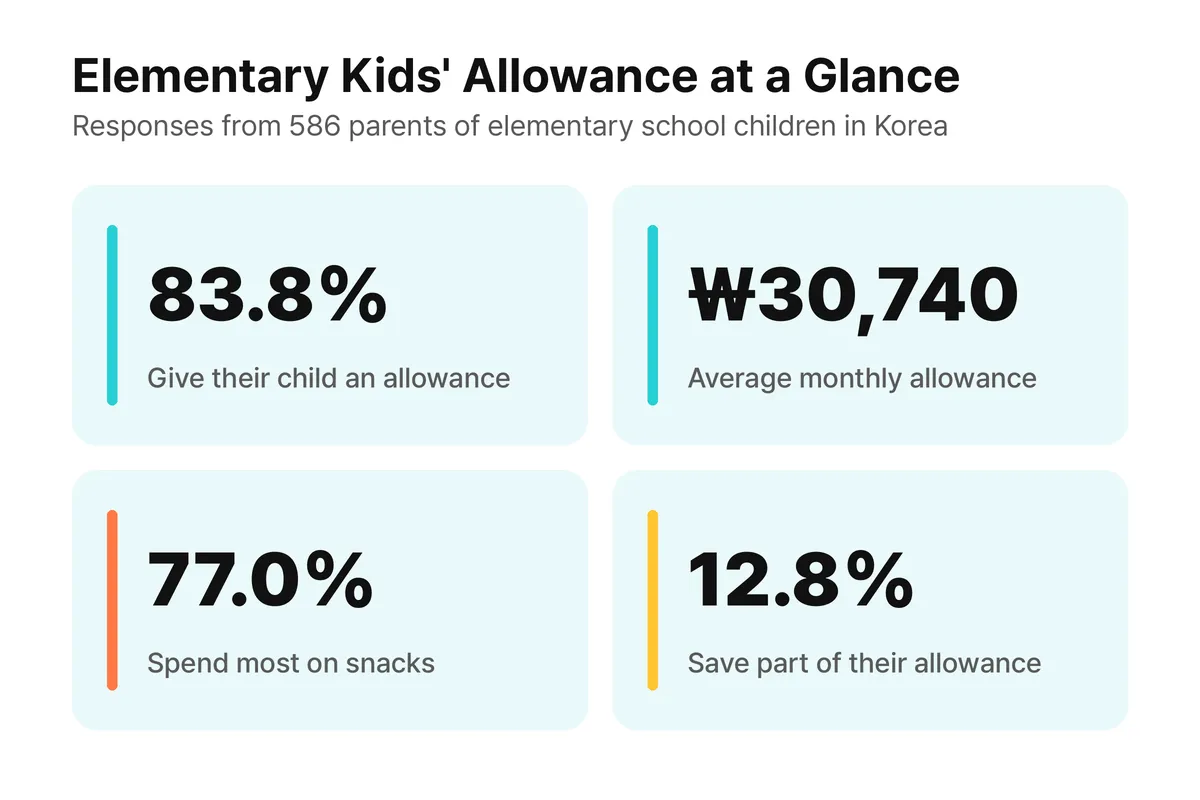
Most elementary school students are already spending their own money. In a survey of 586 parents of elementary school children in Korea, 83.8% said they give their child an allowance, and the average monthly allowance was about 30,740 won.
But children often don't know where that money goes.
In this article, we look at why an allowance tracker lesson belongs in the elementary classroom, how to design the worksheet, and how to run it as a 40-minute lesson. At the end, we share a free allowance tracker worksheet (PDF) built on exactly this structure.
Why teach with an allowance tracker?
In the same survey, the top spending category for children was snacks (77.0%), and only 12.8% said they save. Parents' biggest concerns were impulse buying (41.2%) and spending everything at once (21.8%).
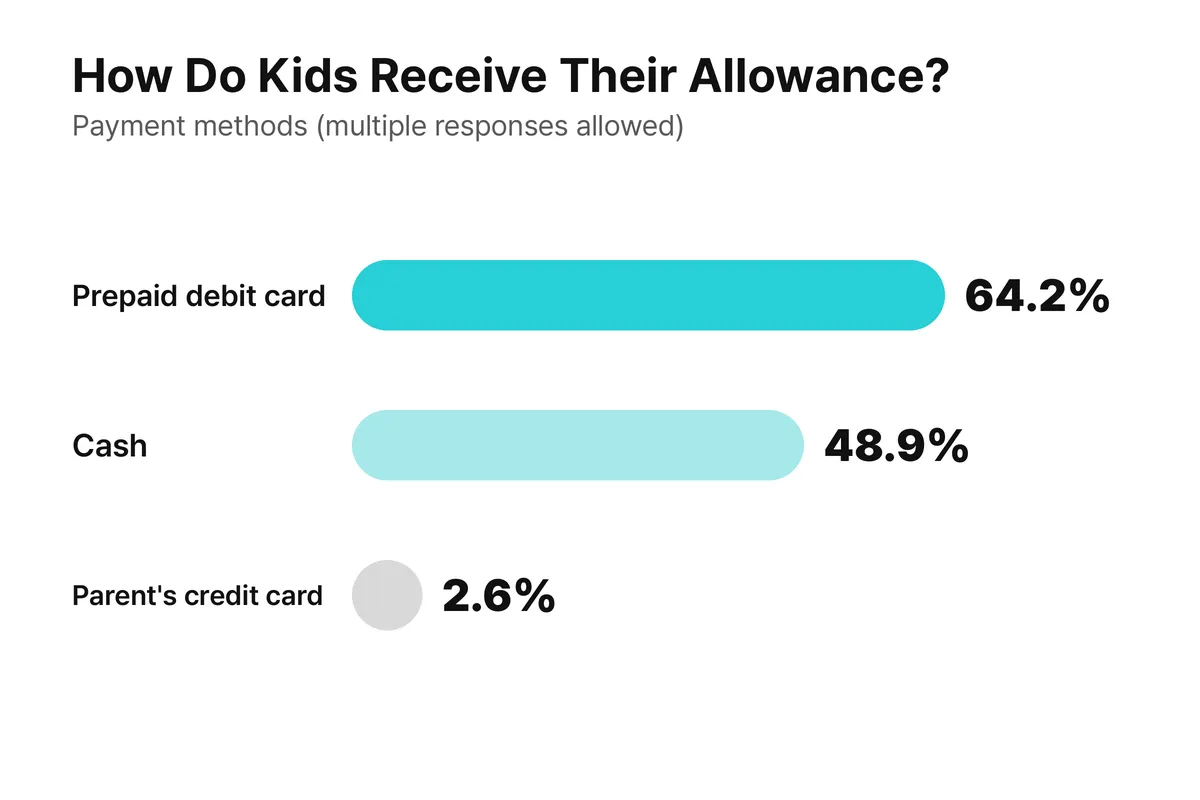
What stands out is how children receive their allowance. More parents said they use a prepaid debit card (64.2%) than cash (48.9%). When kids pay by card, they don't see money leaving their wallet, so it becomes even harder for them to keep track of how much they've spent.
An allowance tracker is the simplest tool for making this invisible flow of money visible. Because it needs nothing more than a single sheet of paper, it also works well as a first lesson in elementary financial education.
The goal: reflection, not monitoring
If an allowance tracker lesson ends with a lecture about saving money, students will start to see tracking as just another homework assignment. The goal is not to learn how to spend less, but to learn how to look back on the choices you've made.
That's why the activity works best in three steps.
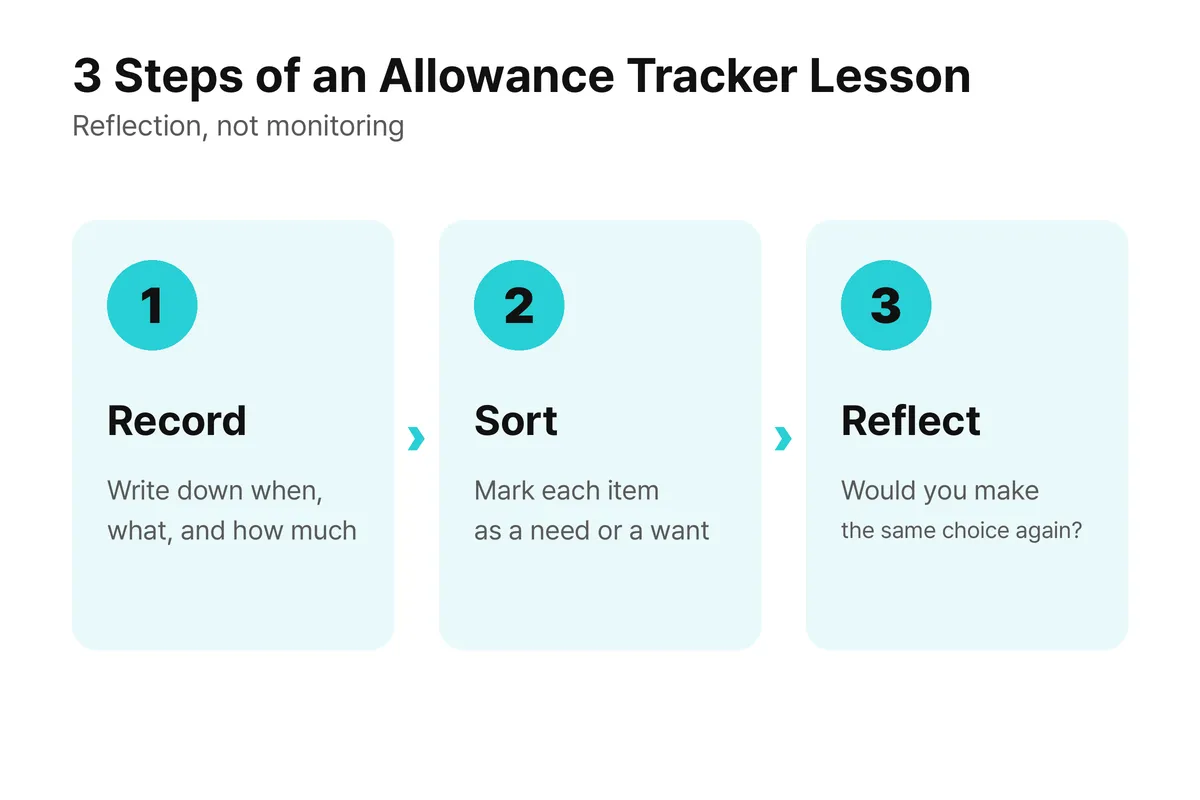
Record: Write down when, what, and how much you spent.
Sort: Separate what you really needed from what you wanted.
Reflect: Think about whether you would make the same choice again.
How to design the allowance tracker worksheet
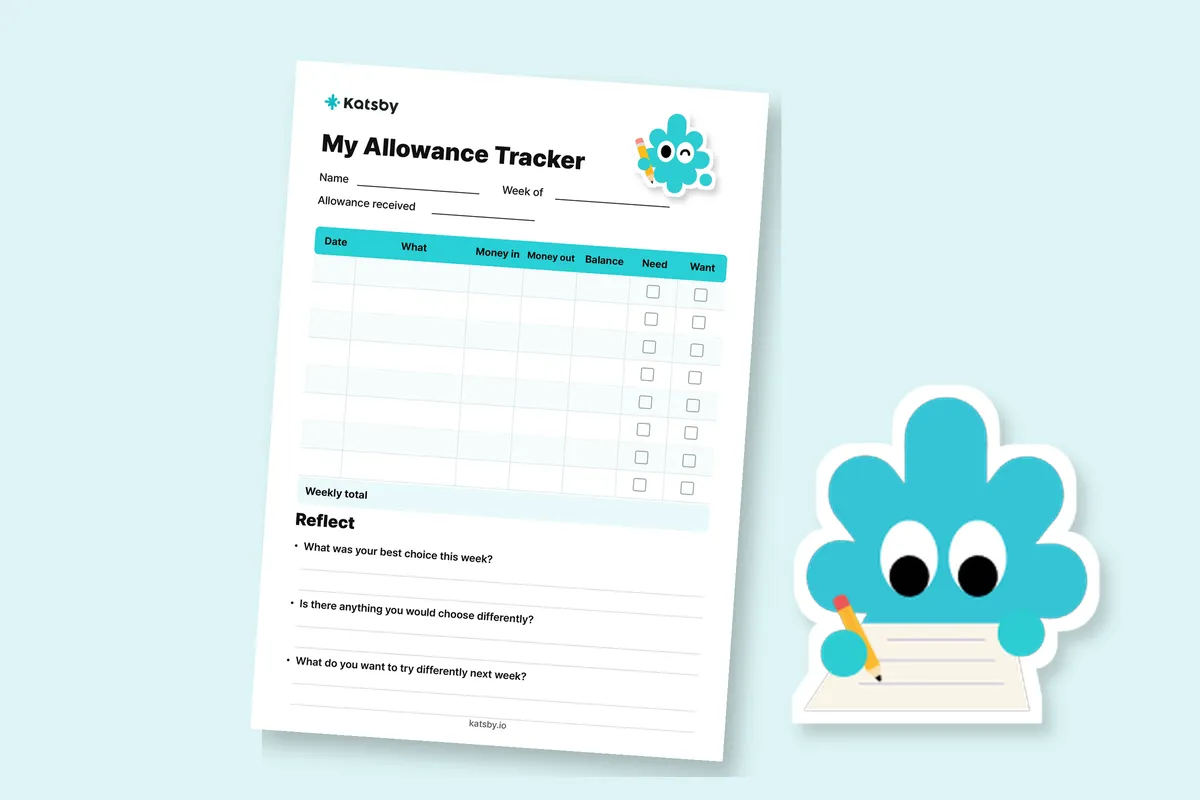
If you divide the worksheet into the three parts below, even elementary students can fill it out on their own.
Record section: Date, item, money in, money out, and balance. Having students calculate the balance themselves naturally connects the activity to math.
Need / want check: For each expense, students mark one of the two. There is no right answer. The point is for students to set their own criteria.
Reflection questions: Add two or three questions, such as "What was your best choice this week?" or "What would you change if you could choose again?"
Sample reflection questions
Choose two or three that fit your grade level and lesson goals.
What was the purchase you were happiest with this week? Why?
Is there anything you wouldn't buy if you could choose again?
Of the things you marked as "want," which do you still want a week later?
What would you like to do with the money you have left? If you save it, what would you use it for?
What would you like to try differently next week?
Letting students know in advance that there are no right or wrong answers makes it easier for them to answer honestly.
Sample 40-minute lesson
Time | Activity |
|---|---|
5 min | Warm-up: "What's something you bought last week that you remember?" |
10 min | Read a one-week allowance scenario |
10 min | Record the scenario's expenses on the worksheet |
10 min | Sort expenses into need and want, then compare with a partner |
5 min | Answer the reflection questions and have one or two students share |
Sample scenario
On Monday, Jiwoo received a weekly allowance of 7,000 won. On Tuesday, Jiwoo bought a drink at the convenience store near school for 1,500 won. On Wednesday, Jiwoo bought a 3,000-won sticker set as a birthday present for a friend. On Thursday, Jiwoo bought a notebook needed for class at the stationery store for 1,000 won. On Friday, Jiwoo wanted to try a new snack and spent 1,200 won. How much money does Jiwoo have left?
Students read the scenario, copy each expense onto the worksheet, and calculate the balance (300 won). Then they mark whether each expense was a need or a want and talk with a partner about any items they marked differently. Including items that students may judge differently, like the birthday present, makes the discussion much livelier.
For the first lesson, we recommend using a hypothetical scenario instead of students' real allowances. Allowance amounts and arrangements differ from family to family, and asking students to share real numbers can lead to comparison or make some students feel uncomfortable. Once students are familiar with the worksheet, you can extend it into a one-week tracking assignment for students who want to try it with their own money.
Adjusting by grade level
Grades 3–4: Reduce the record section to three columns (date, item, amount), and have students mark need or want with picture stickers.
Grades 5–6: Cover everything, including calculating the balance and answering reflection questions. Having students set a weekly budget first and then compare it with their actual spending helps build planning habits.
Middle school: Have students include their debit card transactions and separately categorize regular expenses, such as transportation and subscription services.
Connecting to other subjects
An allowance tracker isn't only for financial education lessons.
Math: Calculating the balance connects to addition and subtraction, and weekly spending totals and averages connect to units on organizing data.
Social studies: Choosing what to buy with limited money lets students experience scarcity, choice, and opportunity cost firsthand.
Language arts: Having students write short answers to the reflection questions helps them practice putting their thoughts into writing.
What to watch out for
Don't compare amounts: Focus on how students spent their money, not on who gets more.
Include card payments: If students only record cash, a large share of their actual spending may be missing.
Avoid calling it "wasted money": Buying something because you wanted it can still be a meaningful choice. Ask students to explain their reasons rather than judging them.
Wrap-up
The heart of an allowance tracker lesson is not spending less, but understanding where your money goes and gaining experience making your own choices. With one worksheet and 40 minutes, you can easily get started in an elementary classroom. Rather than treating it as a one-time lesson, setting aside time for reflection once a month during the semester lets students see for themselves how their spending habits change.
Katsby creates English financial and economic education for upper elementary and middle school students. Download our free allowance tracker worksheet, ready to use in class.
Worksheet(ENG).pdfThis blog is run by Katsby, which creates English financial and economic education for teens.