Mandatory Financial Education in the U.S.: Why 30 States Now Require It to Graduate
30 U.S. states now require a personal finance course to graduate from high school. See the numbers, what students learn, and what it means for schools in Korea.

Haru ParkHead of Growth & Partnerships
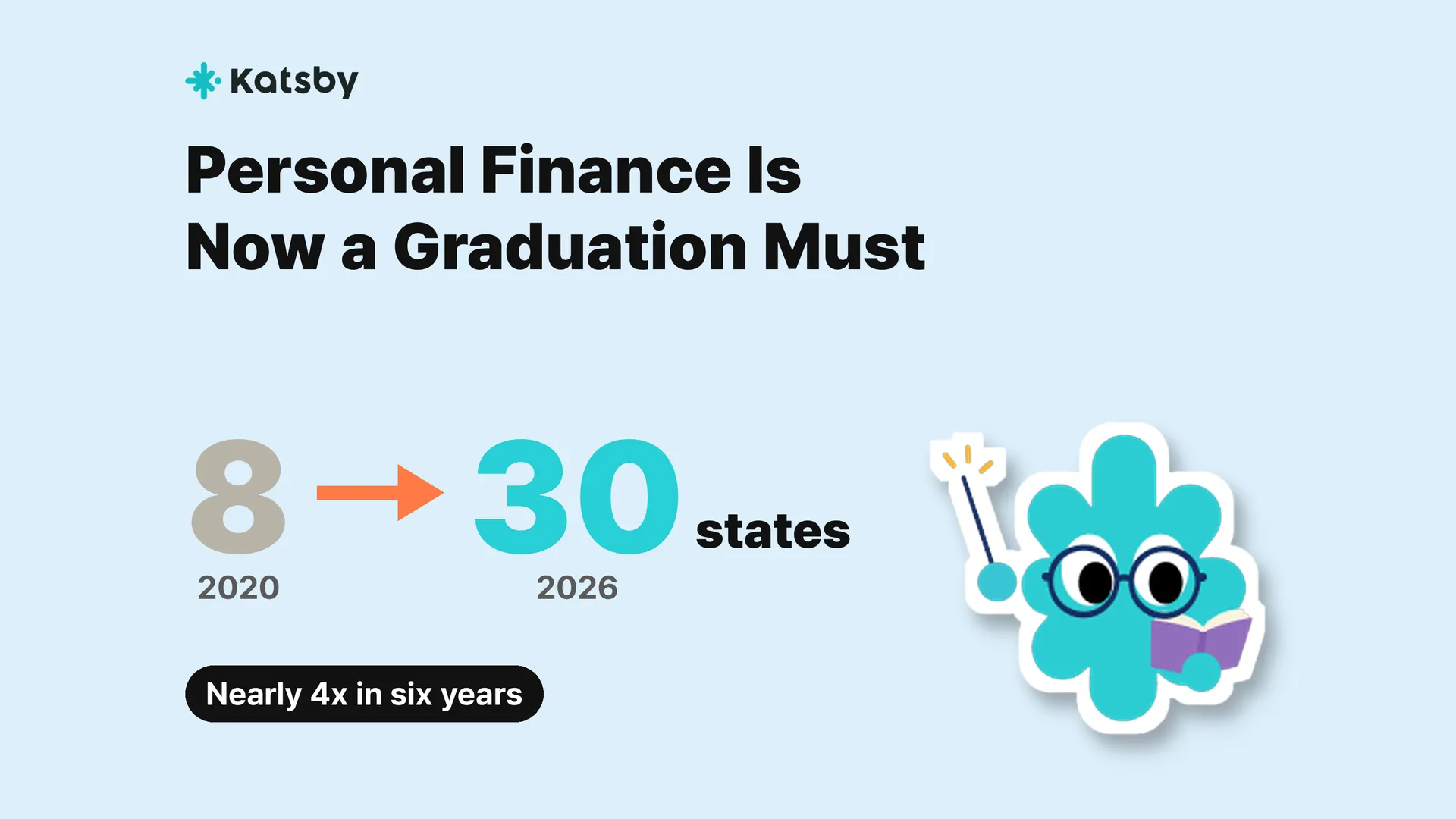
High school graduation requirements in the U.S. are changing. The new requirement is personal finance, a course where students learn budgeting, credit scores, and loan interest.
Just a few years ago, financial education was an elective. Now it is becoming a required course. As more educators agree that students should prepare in school for the financial decisions they will face right after graduation, mandatory financial education has become a major education issue across the U.S. This article looks at the trend in numbers and what it suggests for financial education in Korean schools.
Mandatory financial education in the U.S.: from 8 states to 30 in six years
According to the 2026 report from the nonprofit Next Gen Personal Finance (NGPF), 30 states now require at least one semester of personal finance for graduation. That is nearly four times the 8 states that had such a requirement in 2020.
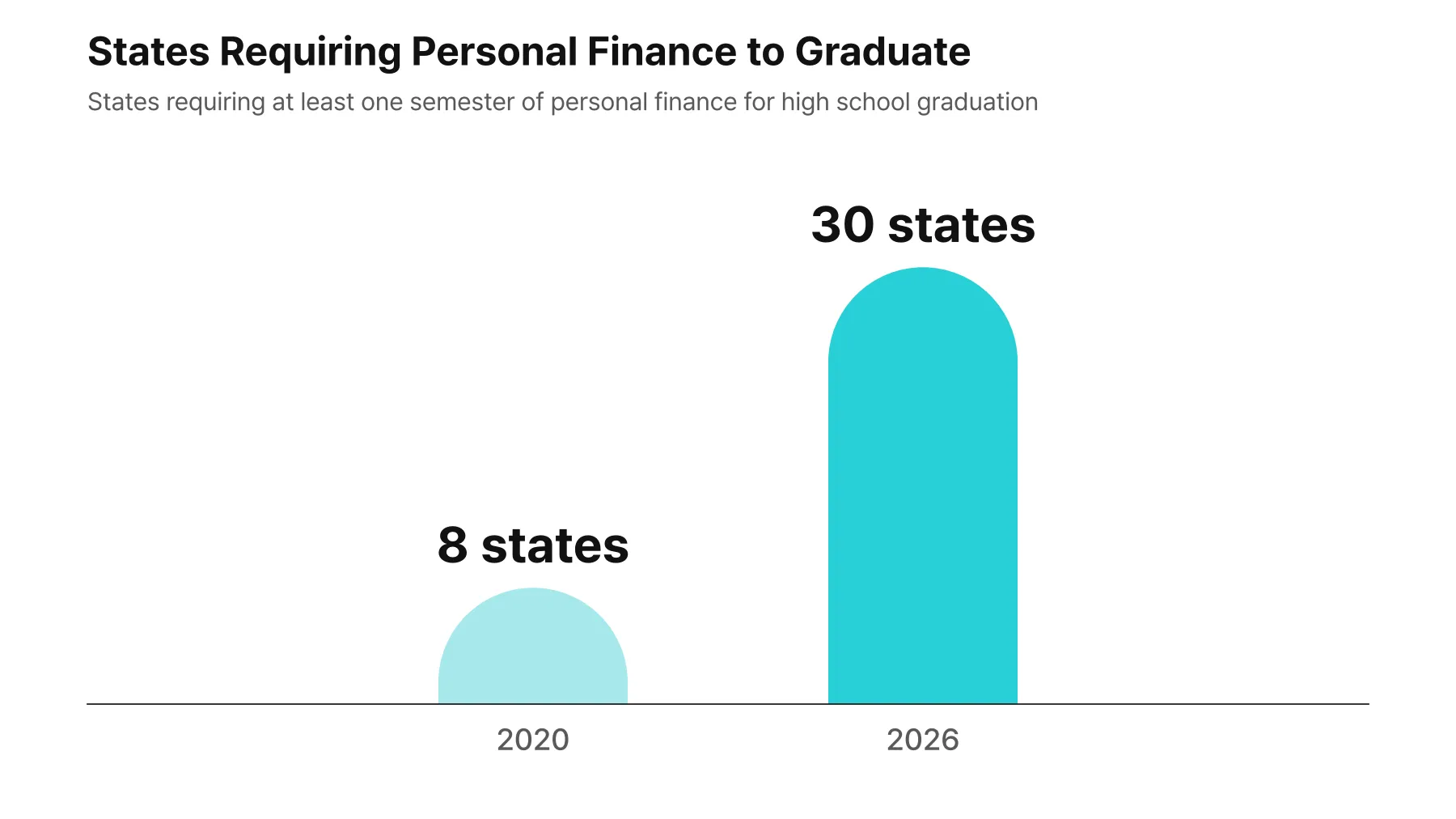
Through its Mission 2030 campaign, NGPF aims to ensure that every U.S. high school student takes at least one semester of personal finance before graduating. The movement has moved past pilot policies in a few states and into a stage where a national goal is being reached state by state.
How many students will be affected, and what will they learn?
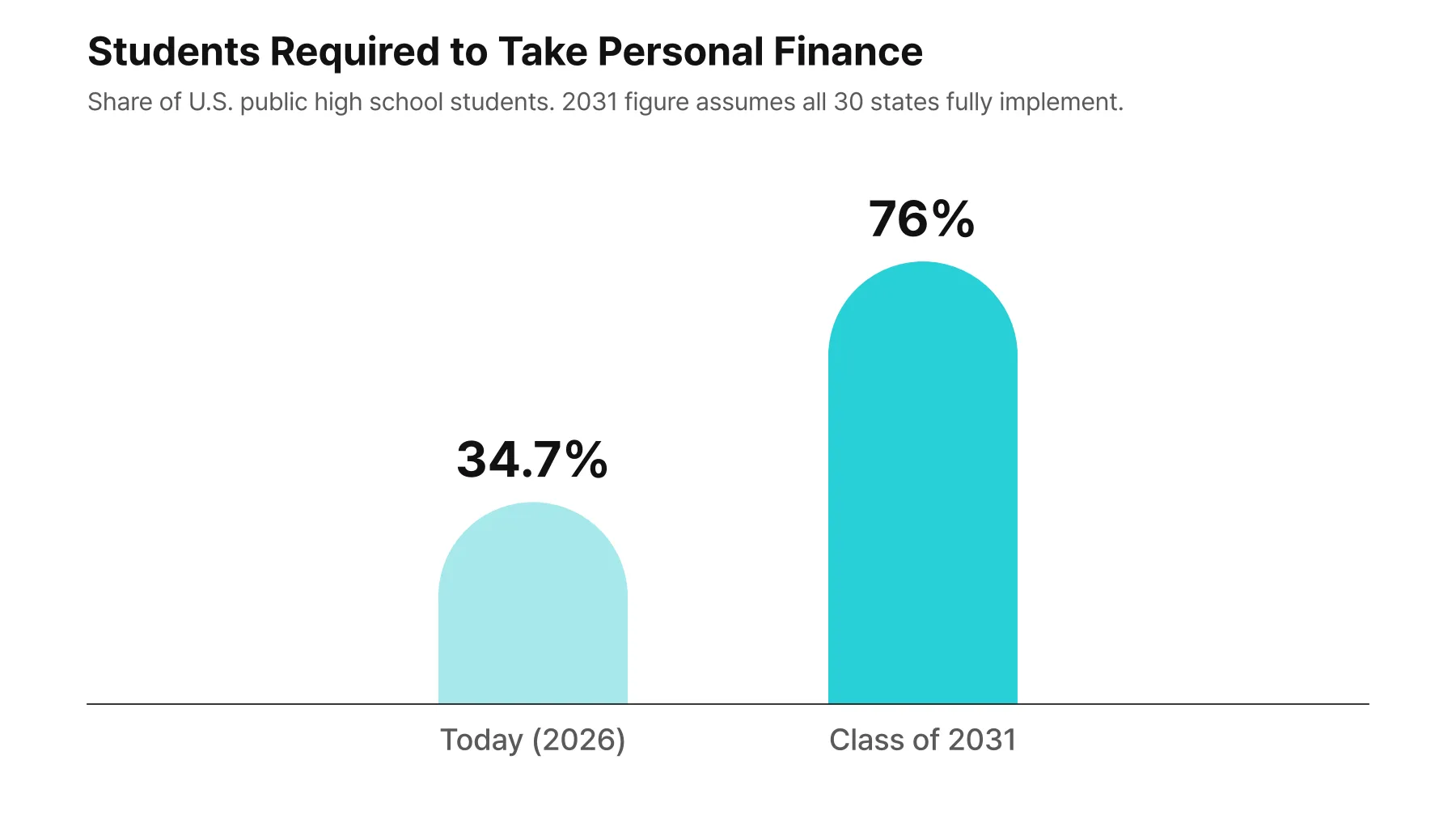
Today, 34.7% of U.S. public high school students must take a personal finance course to graduate. Once all 30 states have fully implemented their requirements, that share will reach 76% for the class of 2031, or three in four students. Financial education, once an elective offered by some schools, is becoming part of the core curriculum that most students complete.
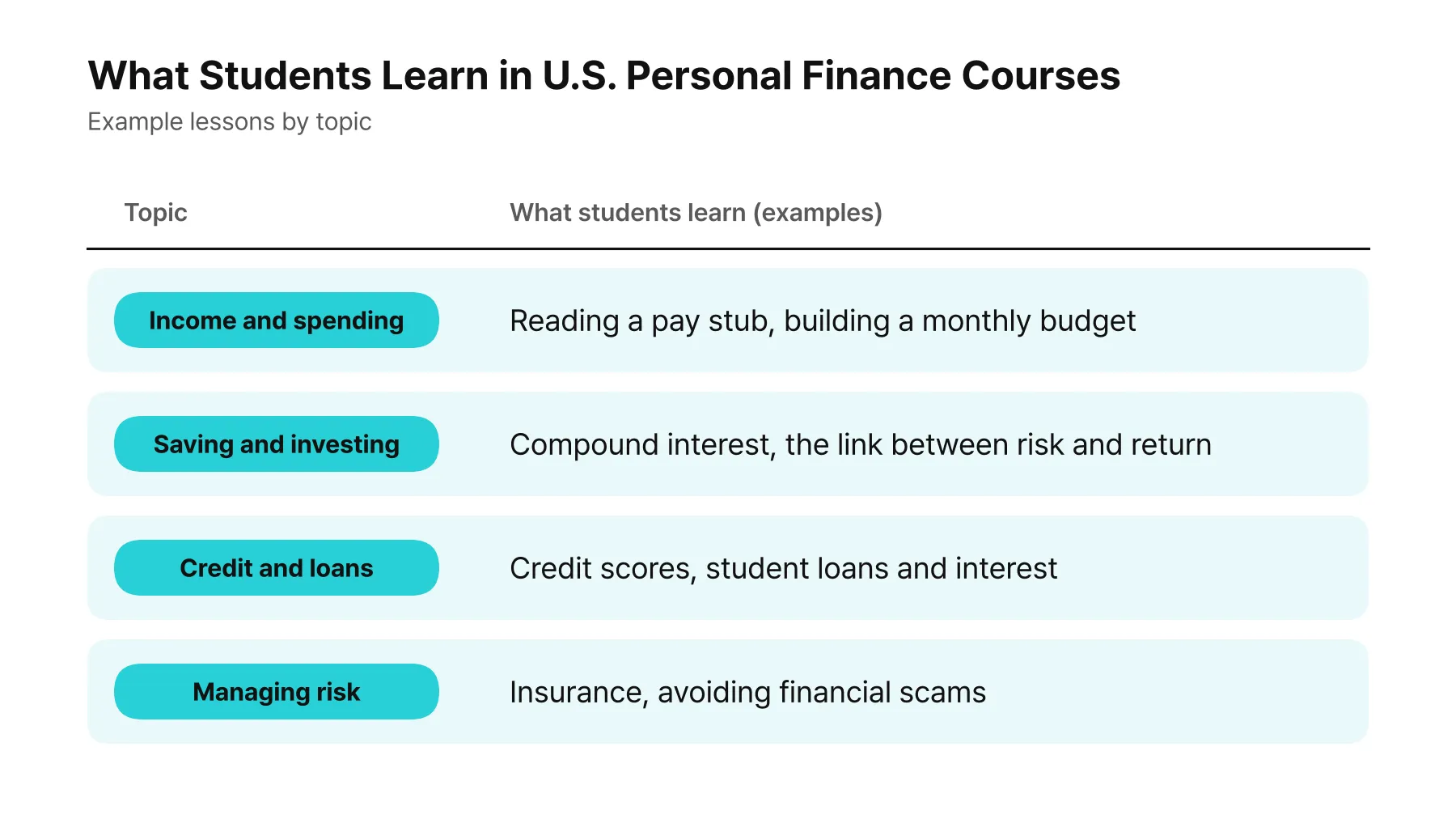
Course content varies by state, but most courses focus on topics students can apply to everyday life right away.
For example, Pennsylvania requires every high school student to complete at least 0.5 credits of personal finance starting in the 2026-27 school year.
The content areas published by the Pennsylvania Department of Education include earning income, spending, saving and investing, managing risk and insurance, and managing credit.
Why mandatory financial education has spread so quickly
There are many reasons, but one is that young people now encounter financial services much earlier.
In the past, many people opened a bank account or got a card only after becoming adults. Today, with digital financial services such as online shopping and mobile payments part of daily life, teenagers can easily take part in a wide range of financial activities from an early age.
As access to financial services has become easier, learning to use them wisely has become more important.
High interest, low readiness among U.S. teens
Another point worth noting is teens' interest in investing.
According to Charles Schwab's 2026 Teen Investing Survey, 70% of teens aged 13 to 17 said they are very or somewhat interested in investing, and 95% said they want to learn more about it.
Of course, being interested in investing does not mean they actually hold a brokerage account or invest on their own, but it is clear that investing and managing money are no longer concerns only for adults.
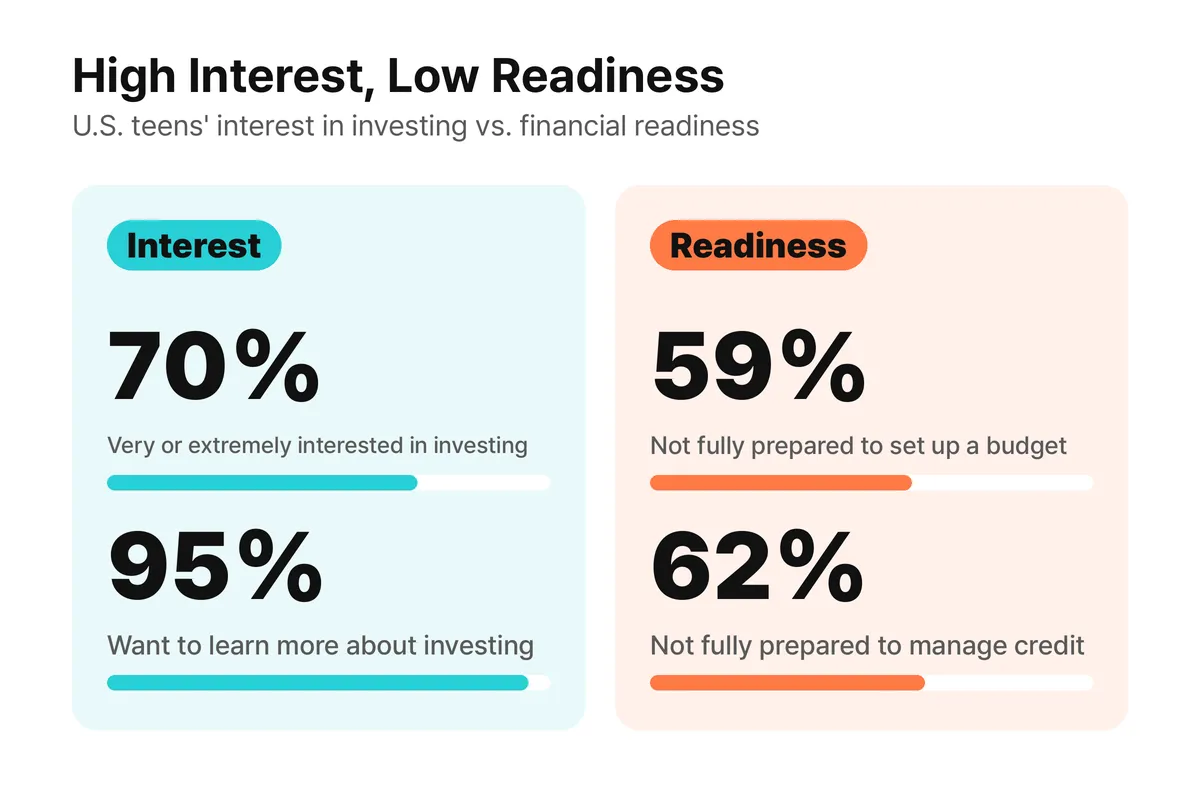
But how prepared are high school students today? A 2026 EVERFI survey of about 161,900 high school students found that 59% do not feel prepared to create and manage a budget, and 62% are not confident about checking and managing a credit score. (Source)
Teens are meeting financial services earlier, but their readiness has not kept pace. The core idea behind these mandates is that schools, not only individuals and families, should close this gap.
Where does financial education stand in Korean schools?
In Korea, financial education is not yet a graduation requirement. The 2022 revised national curriculum introduced a high school course called Finance and Economic Life, but it is an elective, so not every student takes it.
Still, the push to strengthen financial education within public schools is clear.
In its 2026 financial education plan, released in December 2025, the Financial Services Commission said it will support the operation of the Finance and Economic Life course, provide textbooks and programs from financial education institutions to schools, and expand teacher training and hands-on financial education.
What the U.S. experience means for financial education in Korean schools
As the U.S. case shows, once financial education becomes part of the regular curriculum, classroom-ready materials and teacher support matter as much as the policy itself. As Korea expands teacher training and textbook distribution, demand for materials teachers can use in class is likely to grow.
Schools also need to think about how to build the foundation. Just as U.S. personal finance courses start from everyday concepts like budgeting and credit, lessons that introduce financial ideas through experiences such as managing an allowance and making spending choices in earlier grades can serve as that foundation.
Here are two takeaways from the U.S. experience for schools designing financial education lessons:
Focus on decisions, not terms: Rather than memorizing definitions of financial products, build lessons around activities where students make their own judgments, such as creating a budget or comparing loans.
Use trusted outside resources: It is hard for one teacher to create every lesson. Combining public institution textbooks with outside education programs can reduce the burden of lesson preparation.
Katsby creates English-language financial and economic education content and programs that help teens connect finance and economics to everyday life. If you'd like to see sample lessons you can use in school financial education classes, visit the Katsby website.
This blog is run by Katsby, which creates English financial and economic education for teens.